
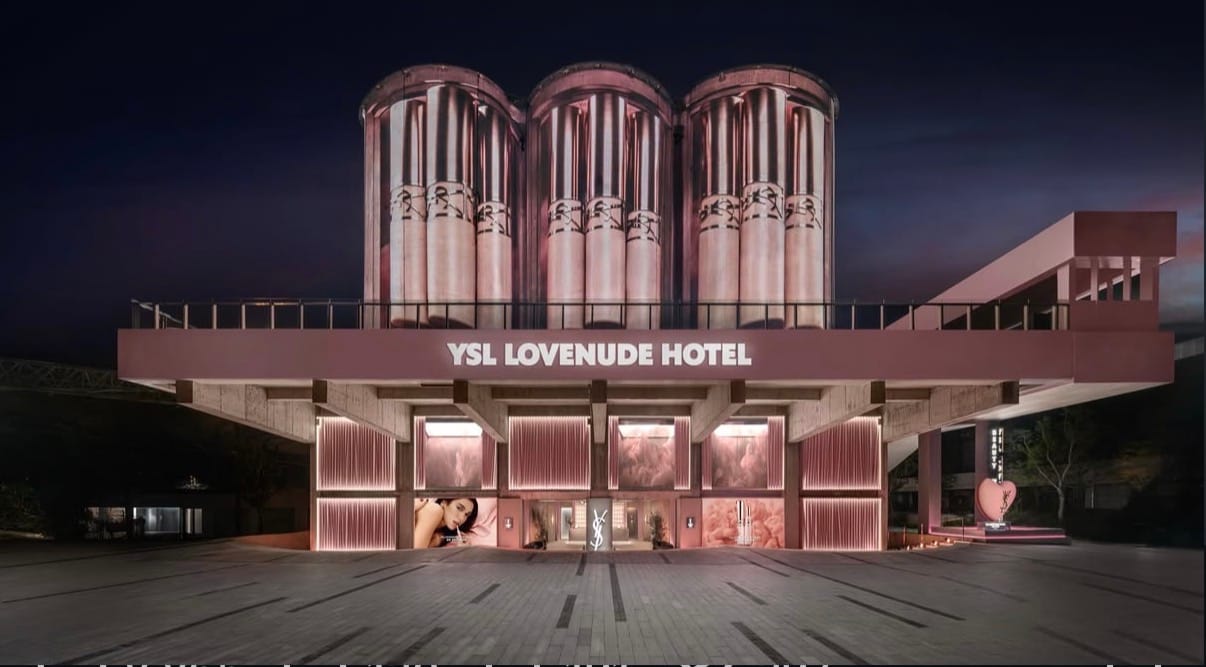
Something is happening at the intersection of fashion, beauty, and hospitality, and it's moving too deliberately to be a coincidence. Louis Vuitton opened a hotel in London just days ago. YSL Beauty has transformed its Shanghai presence from a bar into a fully immersive LoveNude Hotel. The language of hospitality — check-in, room keys, corridors, suites — is being adopted by luxury brands with increasing conviction, and the question worth asking isn't whether this trend is real. It clearly is. The question is why it works so well, and why we keep showing up for it.
The answer lives somewhere between experience and memory.
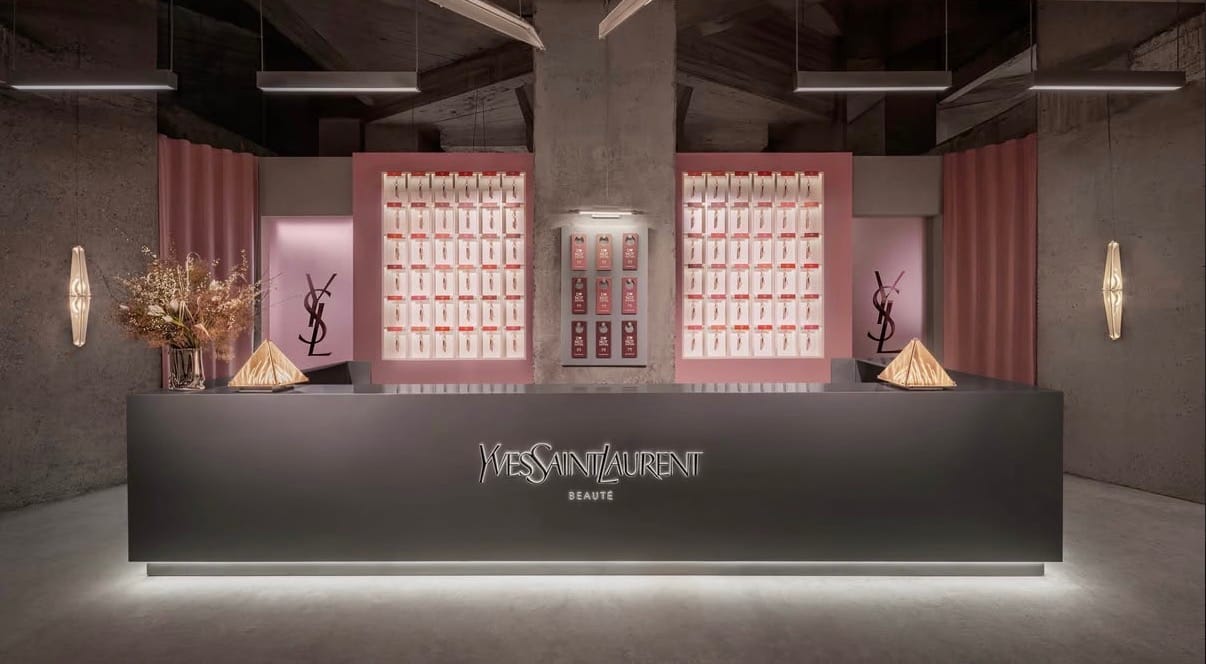
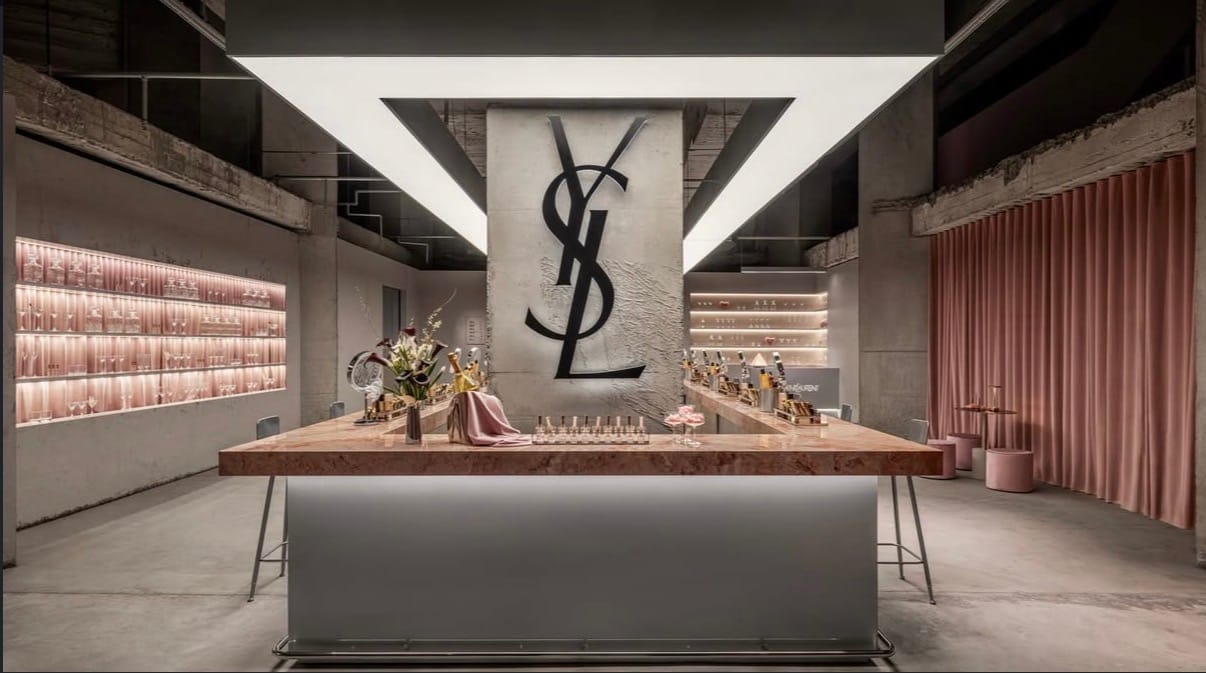
YSL Beauty's LoveNude Hotel in Shanghai is the evolution of last year's Beauty Bar — and the upgrade is telling. A bar is a moment. A hotel is a journey. Visitors arrive and check in as guests, receive a room key, and move through a sequence of carefully curated spaces: getting ready, testing products, capturing content, exiting with samples in hand. The architecture of the experience follows a clear narrative arc — arrival, transformation, self-expression, memory — and every physical detail reinforces it. Corridor lighting, room transitions, photo zones, all calibrated to the LoveNude collection's bold, sensual identity. Nothing is accidental. Everything is set-dressed to feel like the inside of the brand's world rather than a retail environment wearing a costume.
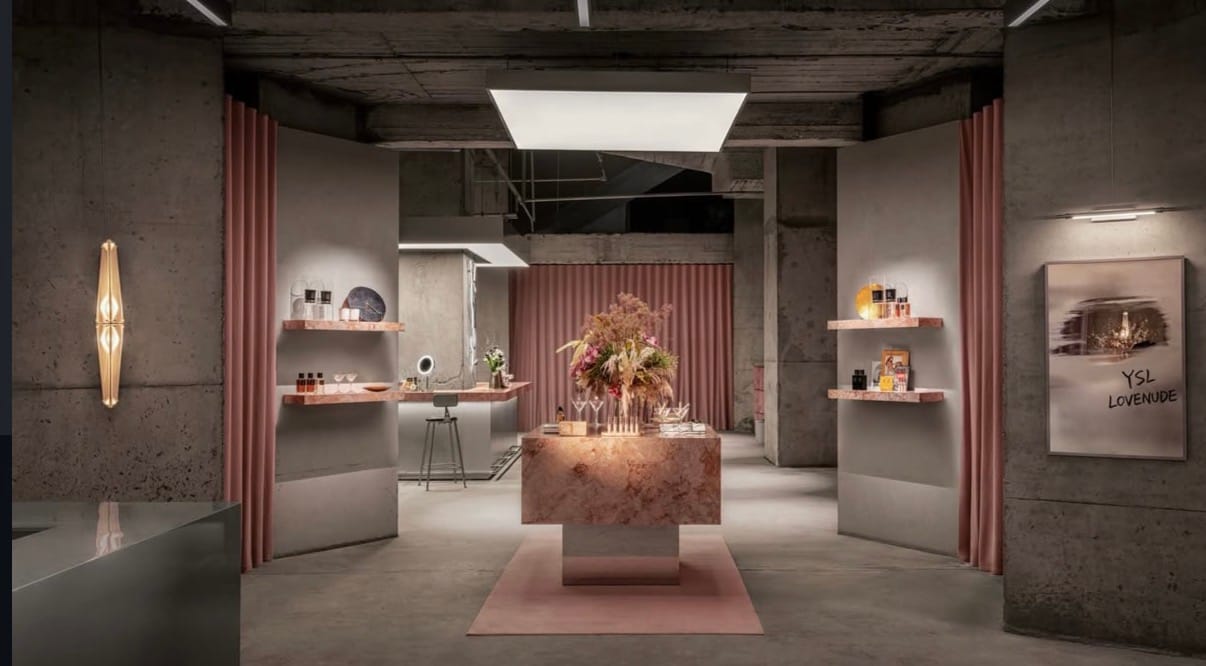
That distinction is the whole point. Traditional retail, however beautifully designed, asks you to browse and buy. Immersive experience asks you to inhabit. The difference in emotional register is enormous — one produces a transaction, the other produces a memory, and memories are what luxury brands are ultimately selling. The product is almost secondary to the feeling of having been somewhere, of having moved through a space that was built entirely around a particular vision of who you are when you're wearing or using the thing they make.
Louis Vuitton understands this at the highest level. A hotel in London isn't just a hospitality venture — it's the brand made physical at the scale of lived experience. You don't visit Louis Vuitton, you stay there. You wake up inside it, eat inside it, move through rooms that carry its codes in every surface and material choice. The brand stops being something you consume and becomes something you inhabit, however temporarily. That kind of immersion doesn't just build affinity — it builds a relationship with a different quality of depth than any campaign or store visit can reach.
The shareable dimension matters too, but it's worth being precise about it. These experiences are absolutely designed to generate content — the photo zones, the room transitions, the cinematic arc of the YSL hotel all but hand you the post. But reducing it to a content play misses what's actually happening. The shareability is a byproduct of genuine experience design, not the goal. When something is built well enough to be lived in, it tends to photograph beautifully as a consequence. The brands doing this best aren't designing for the grid — they're designing for the person, and the grid follows.
We love it because it gives us something that pure product can't: the feeling of being inside the story rather than looking at it from the outside. Fashion has always sold identity alongside clothing, beauty has always sold transformation alongside formula. The immersive hotel format just takes that premise to its logical and most generous conclusion — building the world the brand has always been gesturing toward, and letting you walk through it.
Check in. The room is ready.