
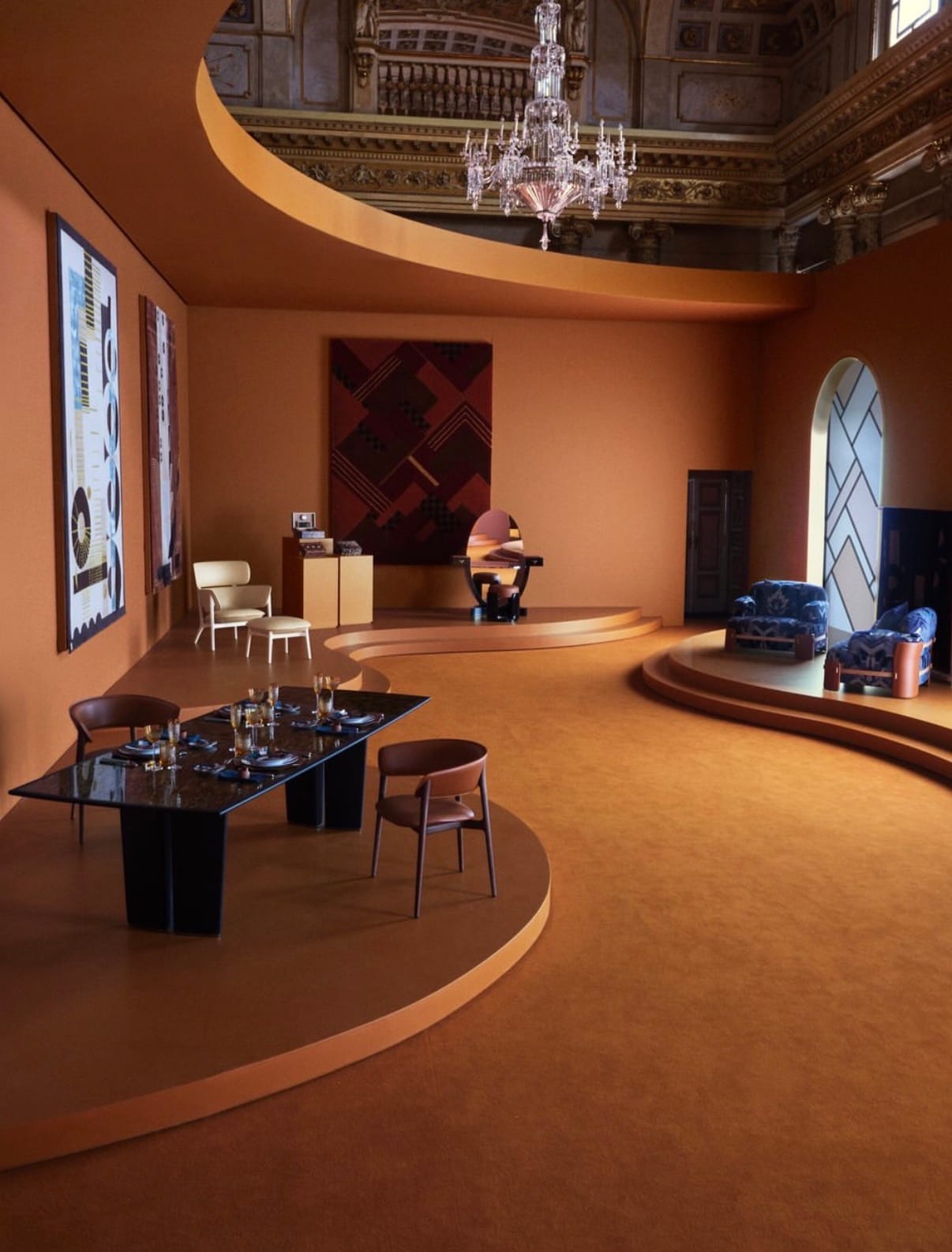
At Palazzo Serbelloni, the house returns to its 1920s origins. The question is whether looking backwards counts as moving forward.
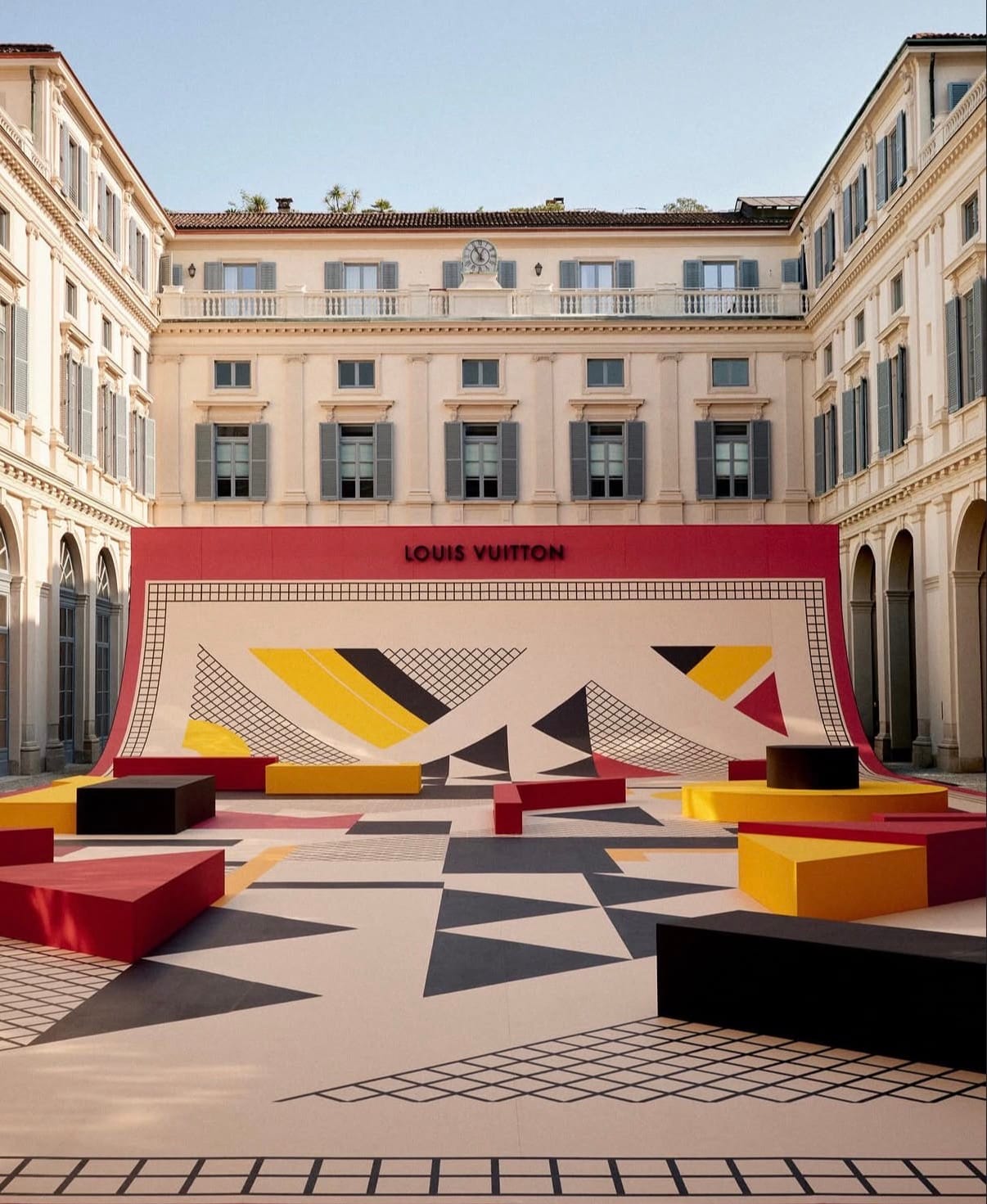
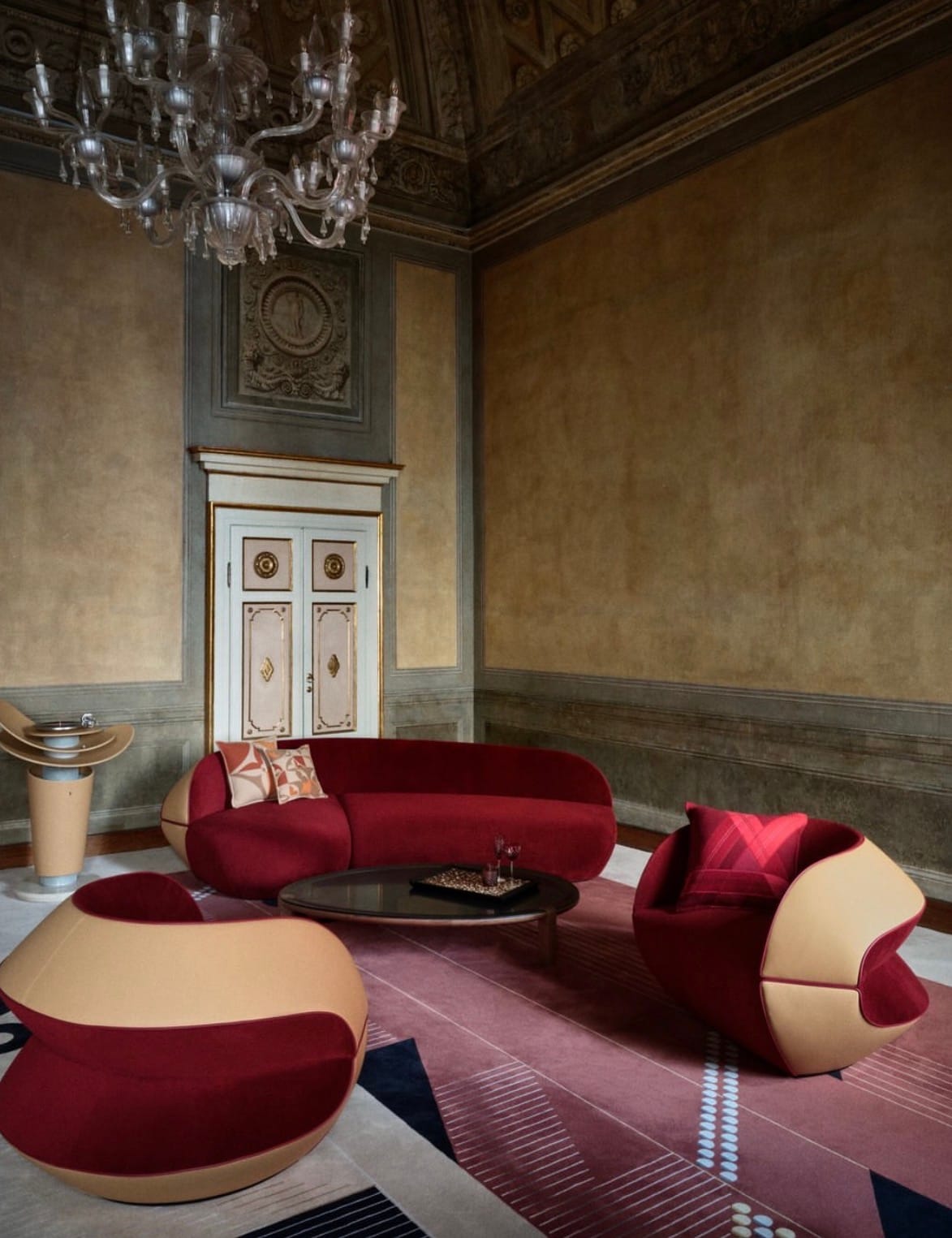
There is something seductive about a luxury house that knows how to stage its own mythology. Louis Vuitton arrived at Milan Design Week 2026 with exactly that — transforming Palazzo Serbelloni into a sequence of 1920s living rooms, each one a carefully constructed argument that the best ideas were always the old ones.
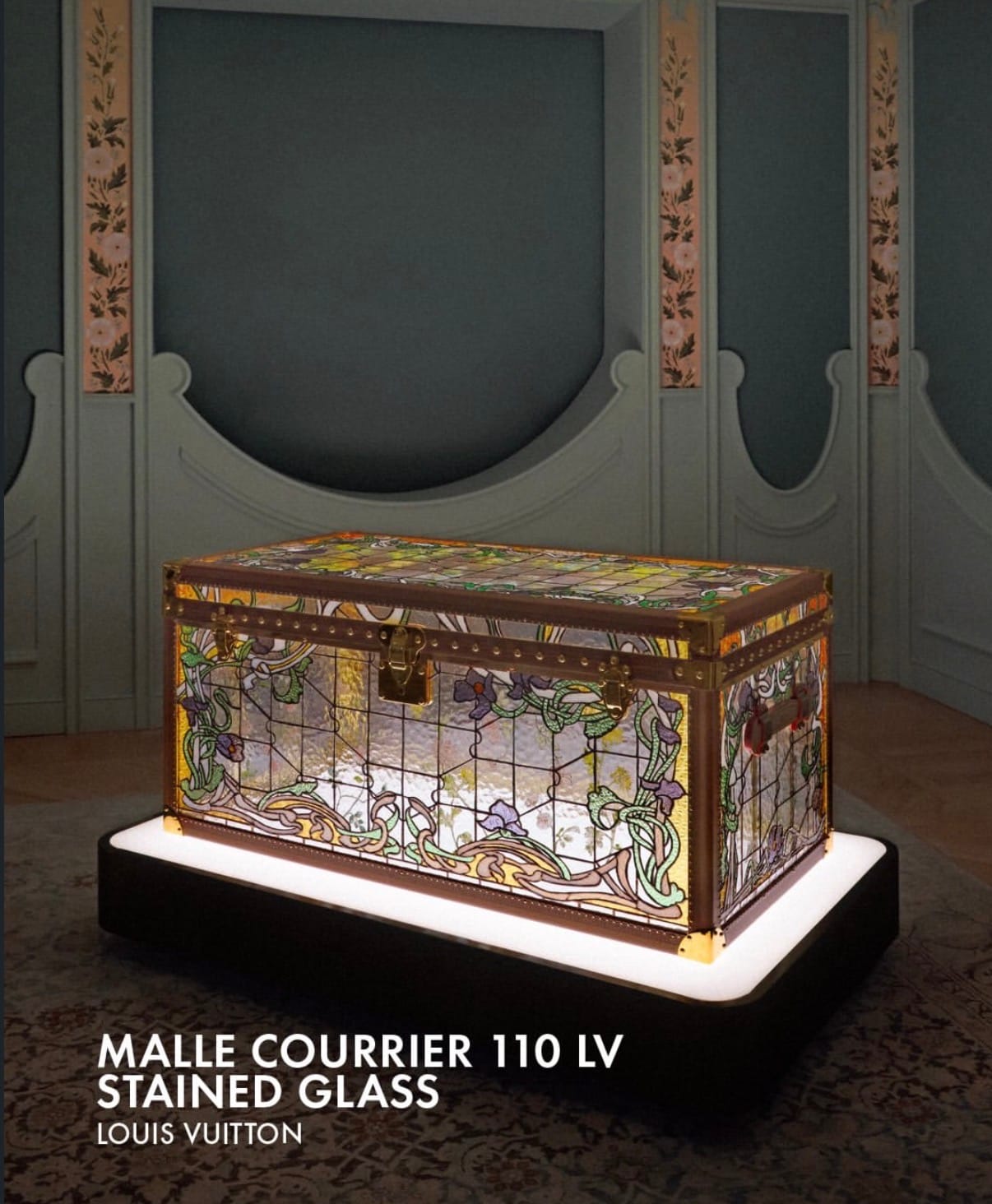
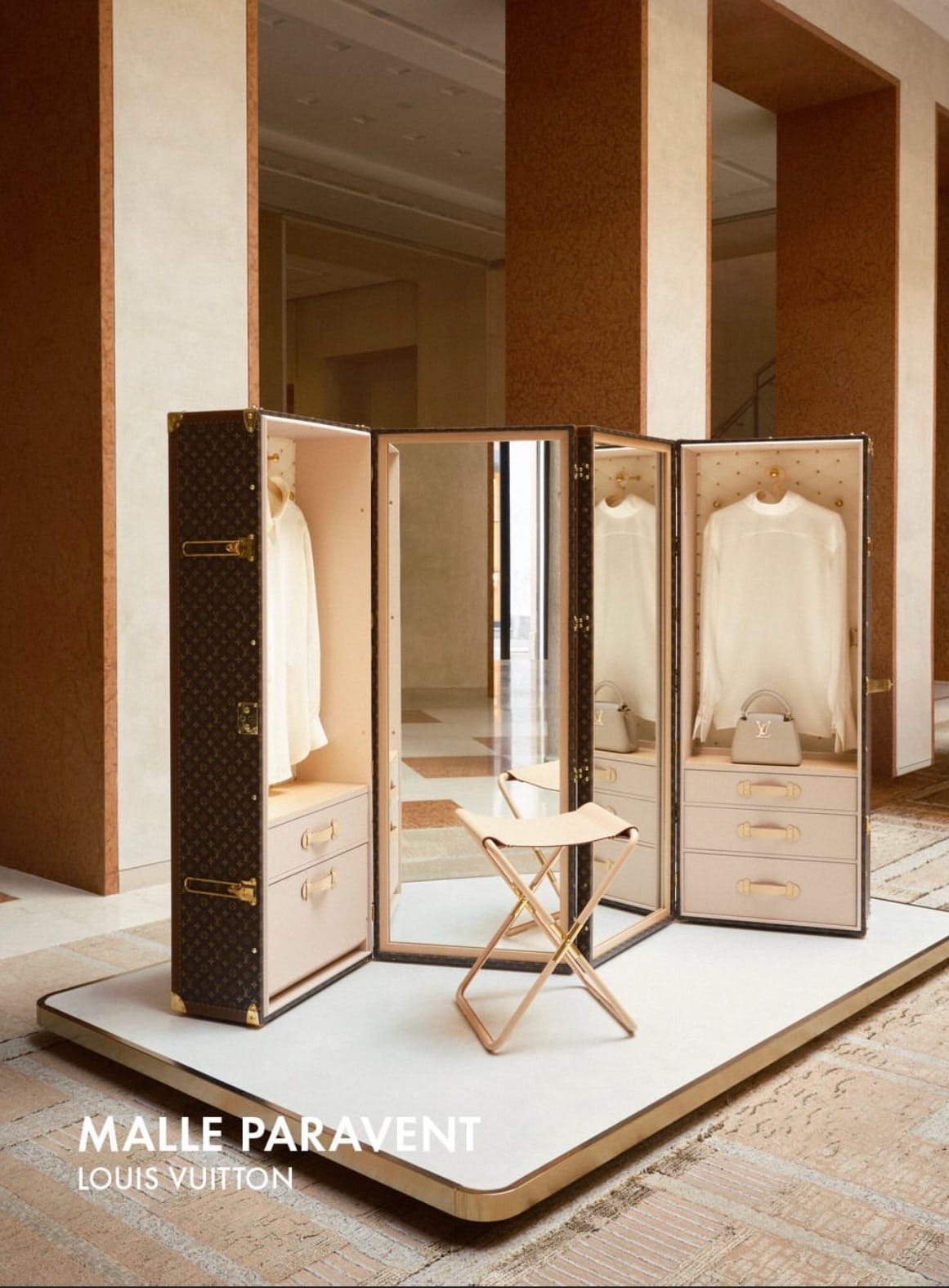
The exhibition, the latest chapter of the house's Objets Nomades collection, is framed around Pierre Legrain — the designer behind Vuitton's first furniture pieces — and told room by room, from the Giangaleazzo salon to the Grand Foyer. Every space doubles as a tribute, every object a citation. It is curated with the kind of precision that makes you feel, briefly, that time is not linear but something you can arrange by theme.
"The Celeste dressing table returns in its original Omega shape — lacquered wood, Nomade leather, and the quiet authority of something that never needed updating."
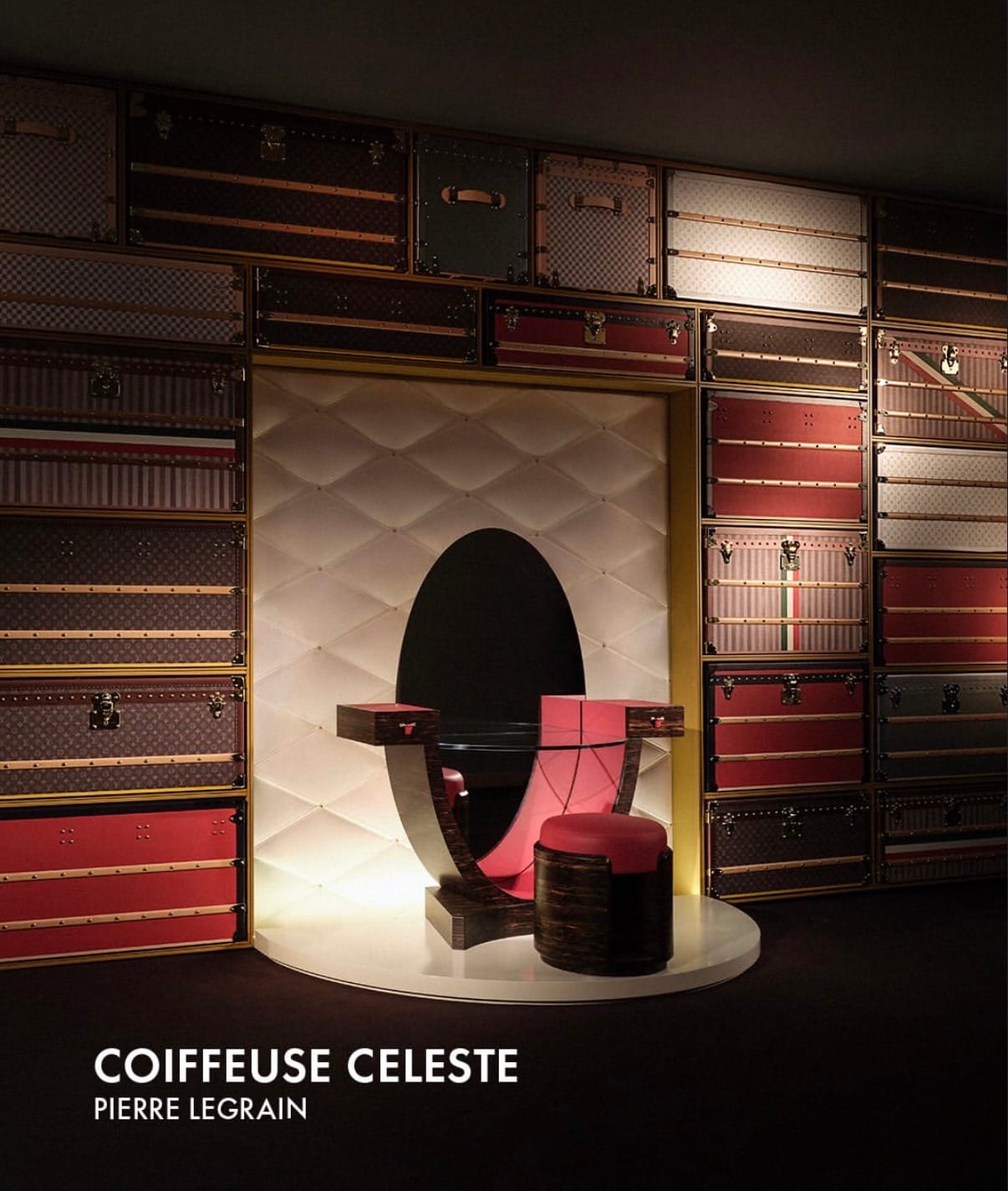
At the center of it all sits the reissue of Legrain's debut design: the Celeste dressing table, returned to its original Omega shape in lacquered wood and Nomade leather. Alongside it, the Riviera Chilienne chair reappears — dense with wood, leather, and mother-of-pearl marquetry — bridging a century of craft in a single seat. These are not reproductions dressed up as innovation. They are originals being given the room they always deserved.
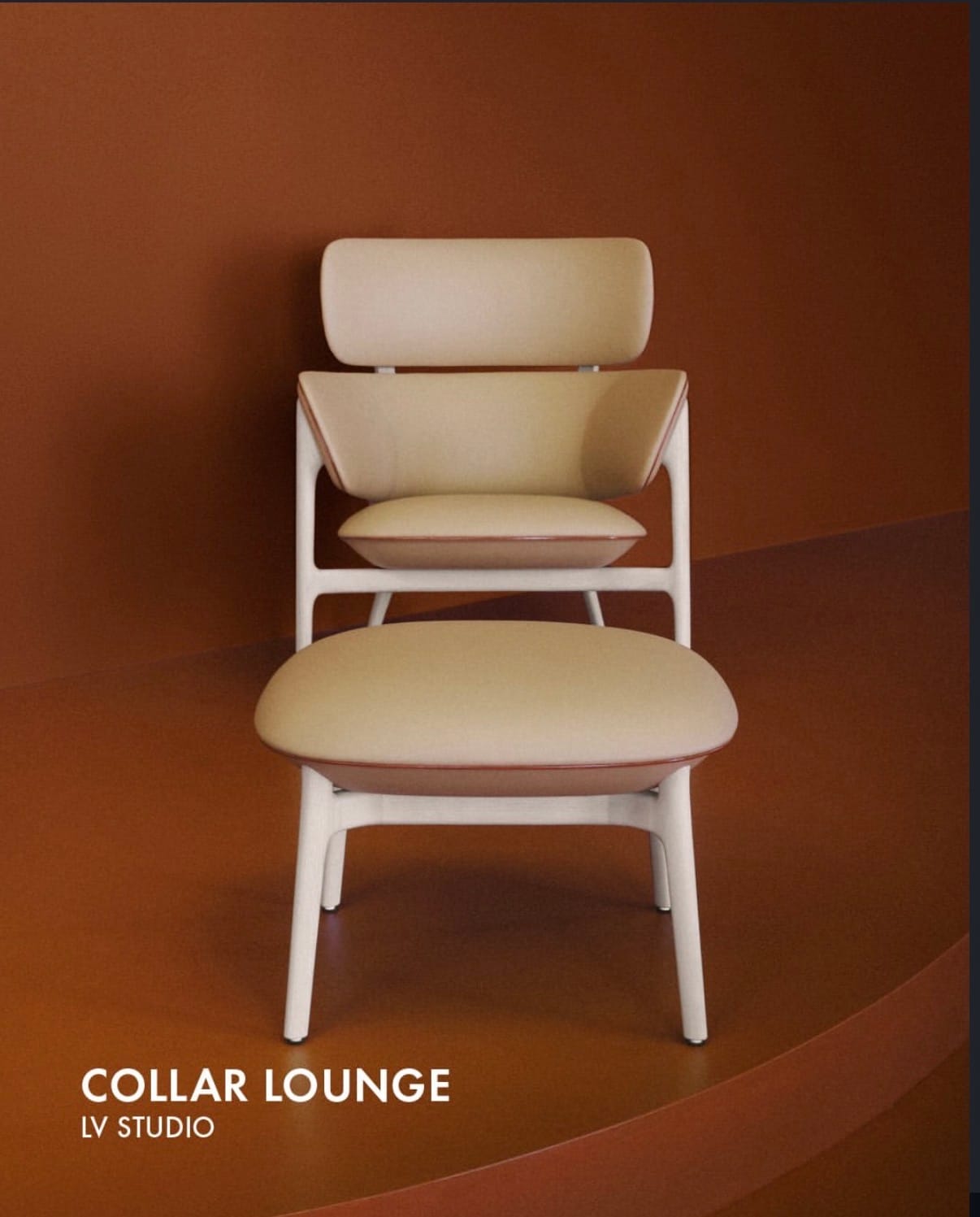
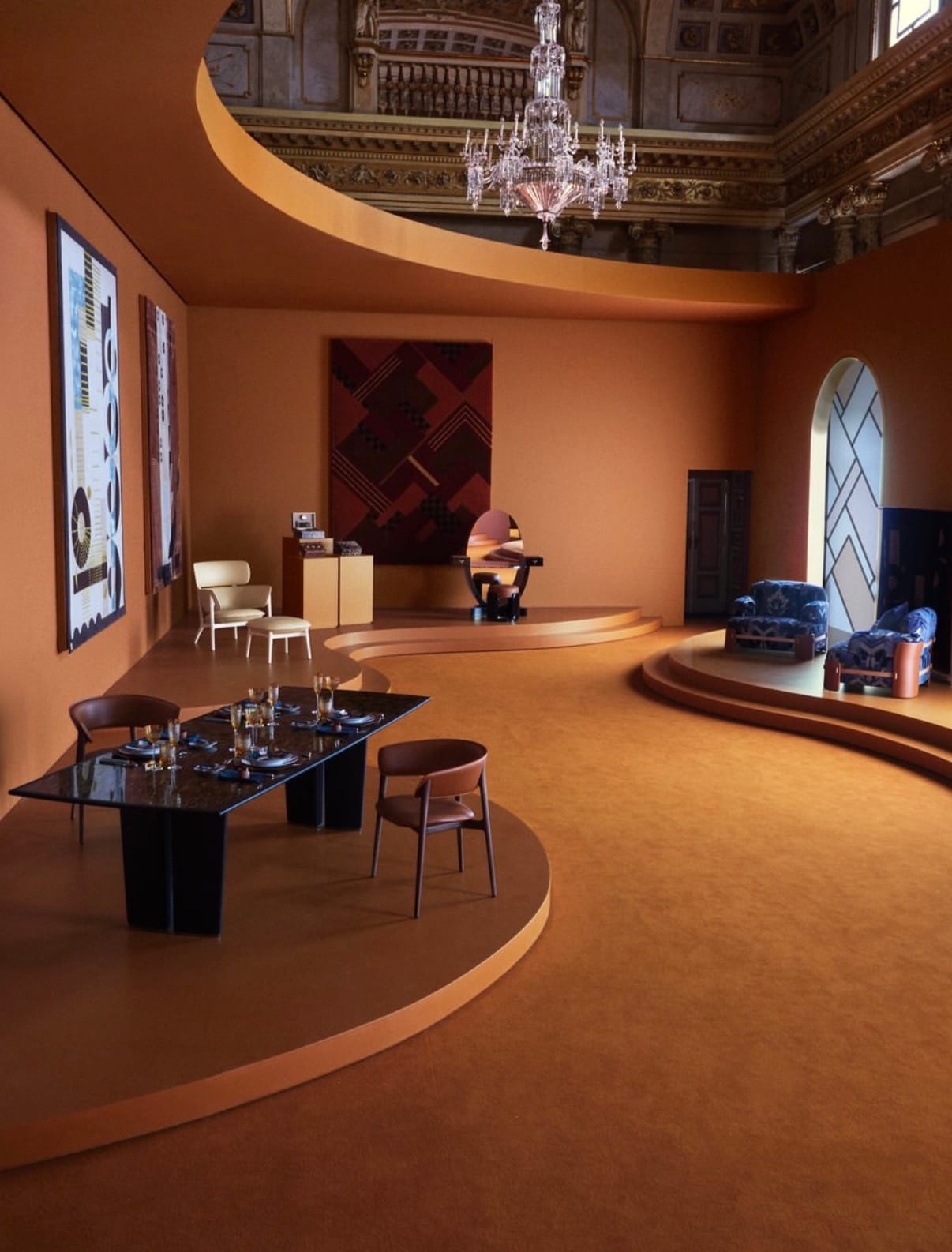
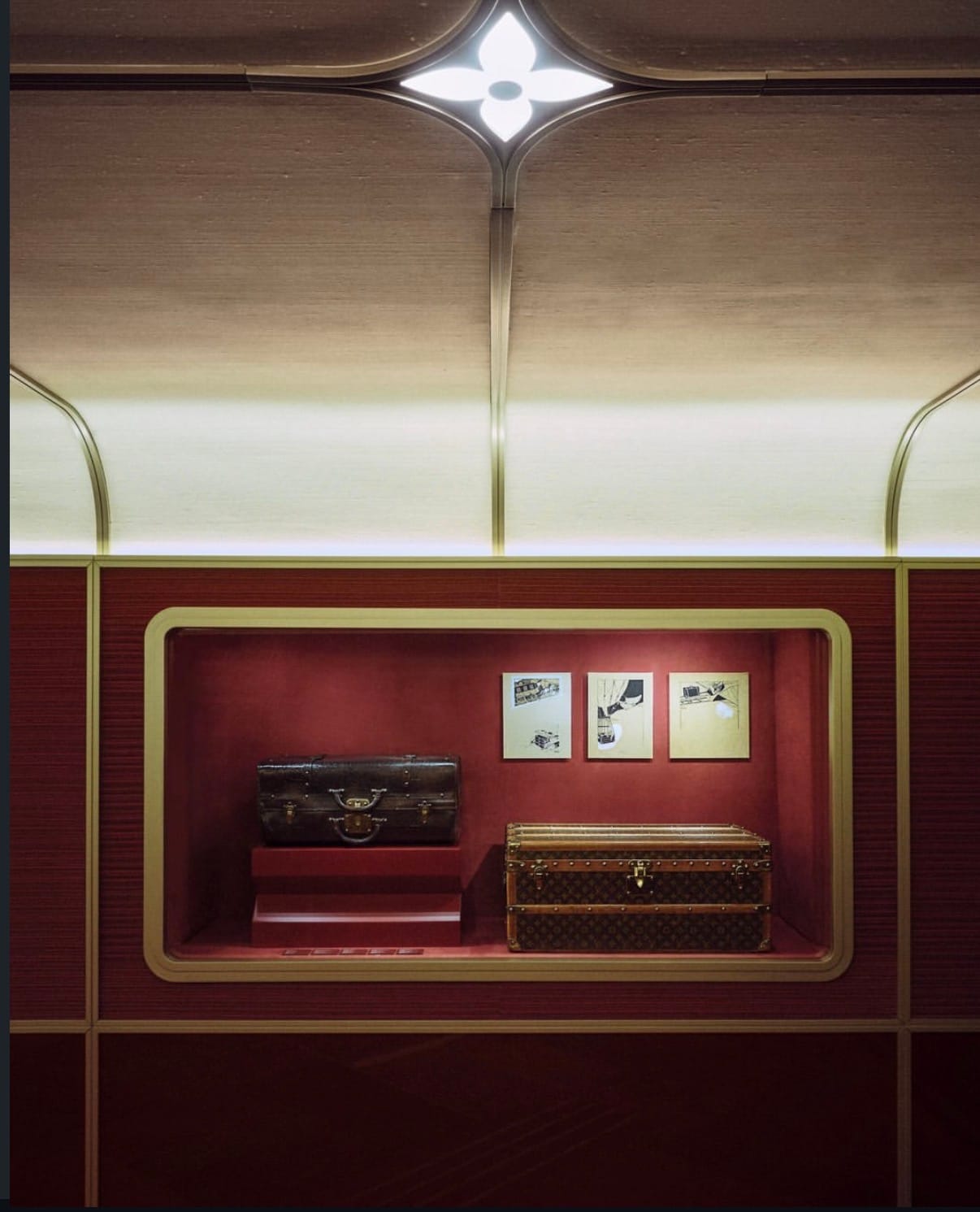
The most striking installation is a period-style train car, where rare early trunks and travel objects sit alongside contemporary Objets Nomades pieces. It is the exhibition's sharpest moment — not because it resolves the tension between history and the present, but because it refuses to. The trunk that crossed continents and the object designed for a 2026 apartment share the same shelf, and Vuitton makes no apologies for the distance between them.
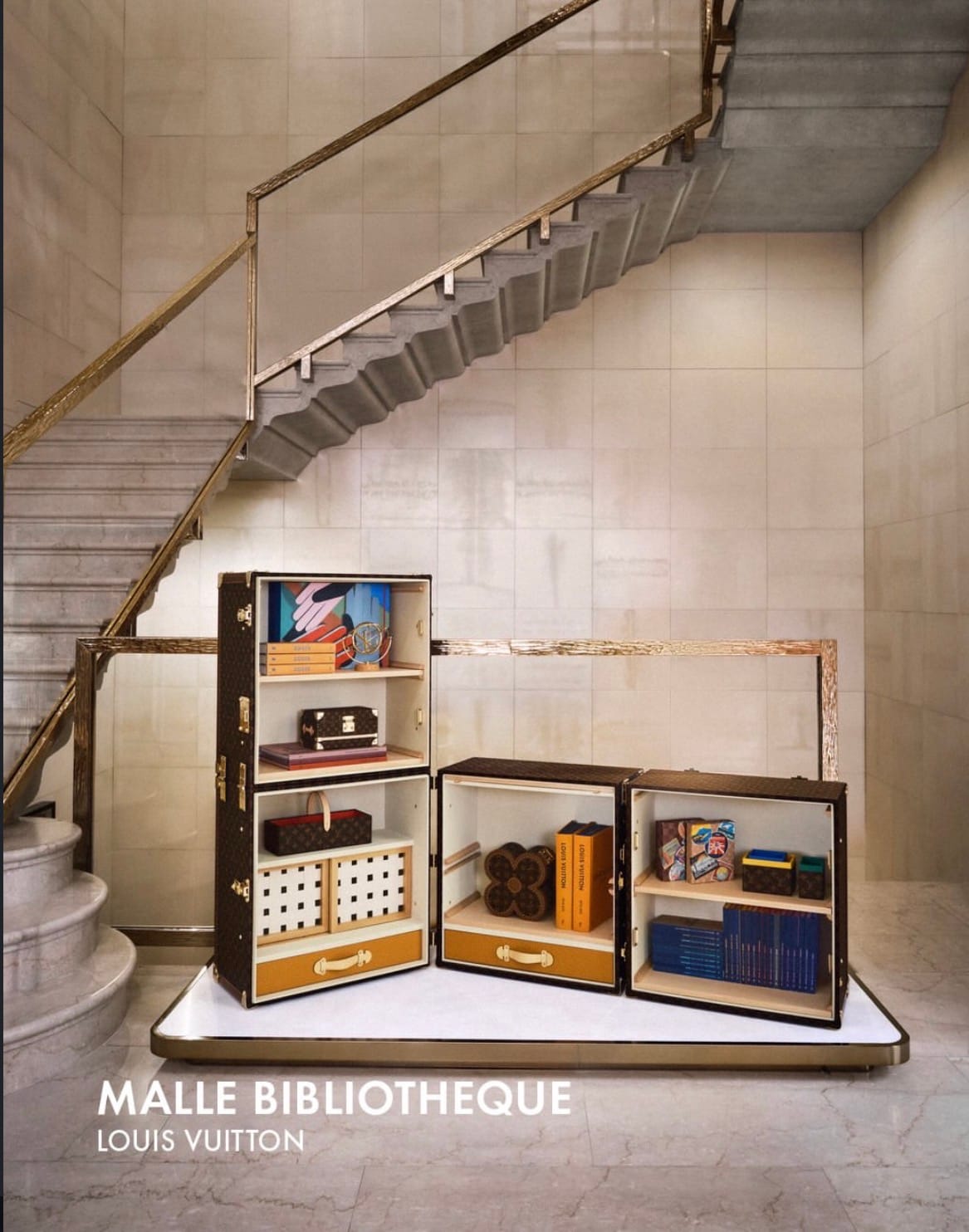
Which raises the real question the exhibition never quite answers: is this archaeology or design? Nostalgia, when executed at this level of craft and institutional confidence, is almost indistinguishable from a point of view. Louis Vuitton knows this, and Palazzo Serbelloni is proof of it — a house that understands the past well enough to make it feel like the future, or at least like the only room worth being in right now.