
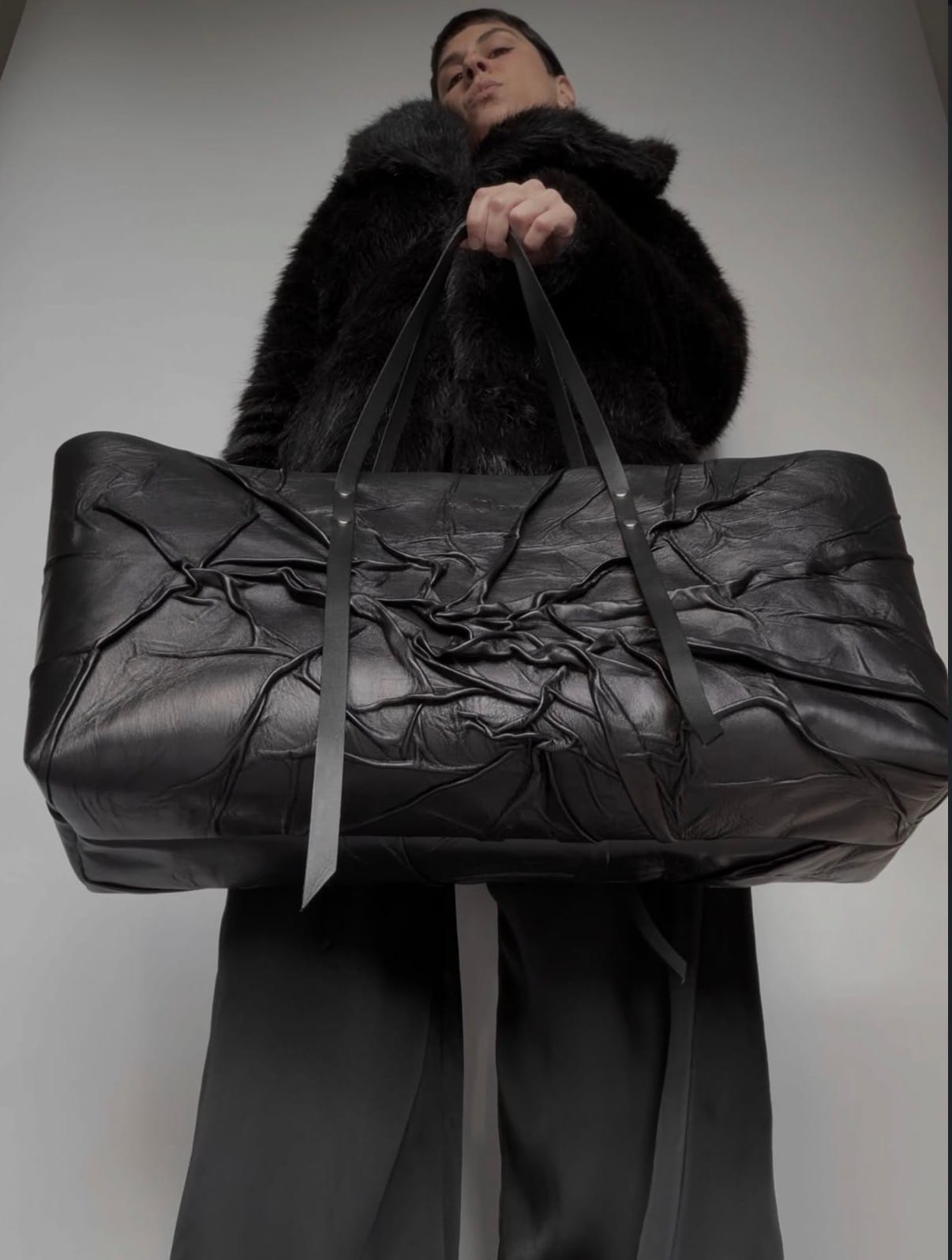
Trained under master artisans in Florence, the designer has built an independent practice around a single radical idea: that the material is not a surface to be controlled, but a collaborator to be listened to.
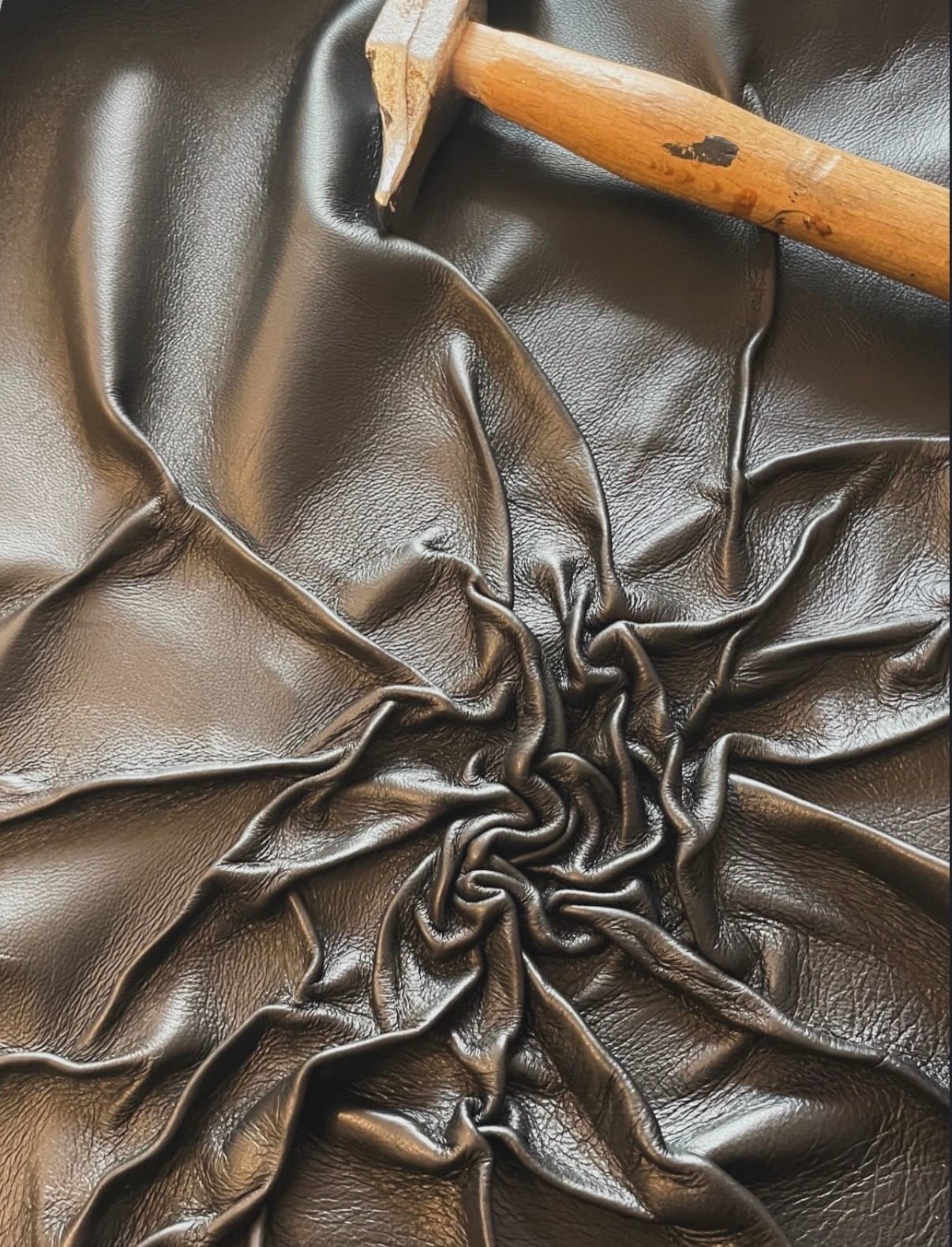
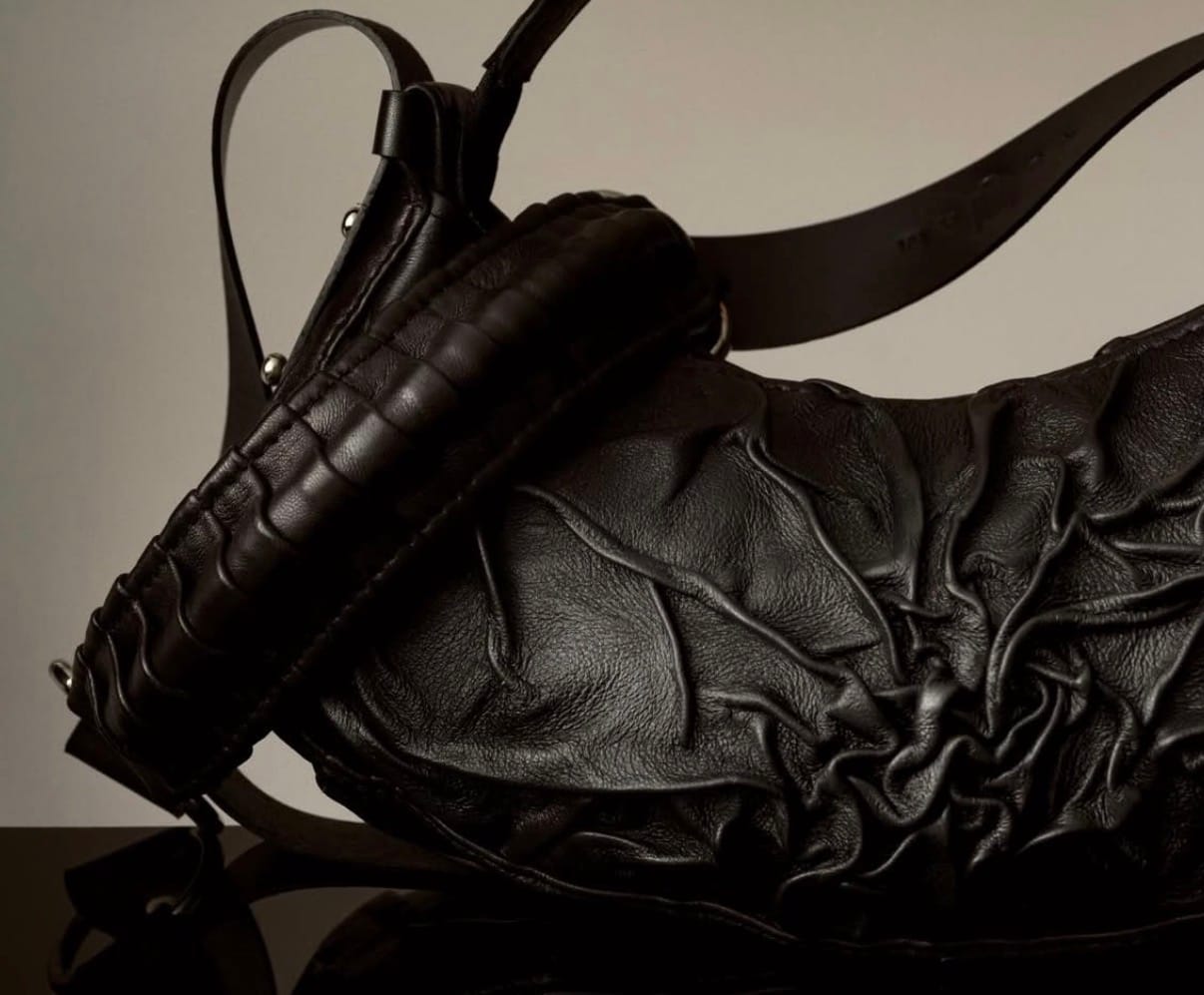
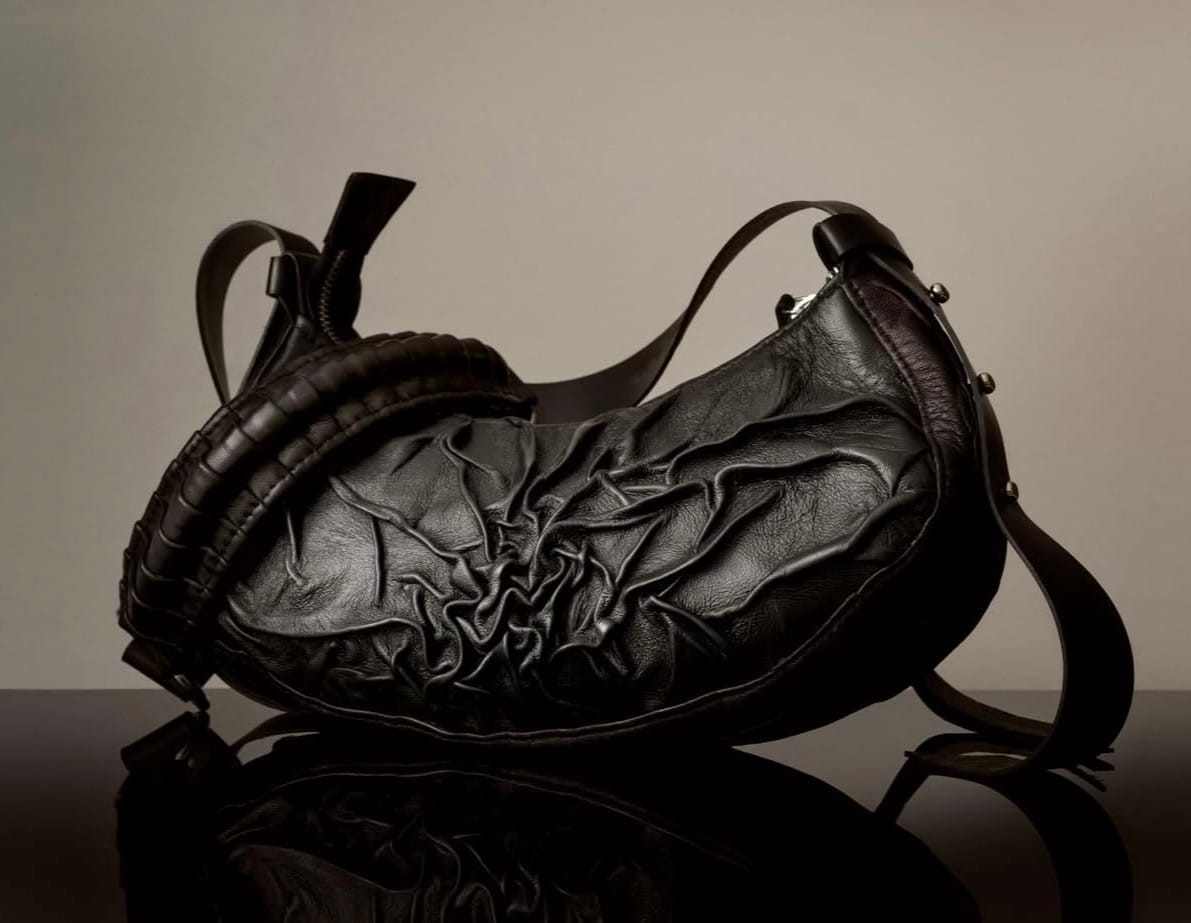
There is a moment in the making of a Noam Moyal piece when the designer steps back and allows the leather to finish the work itself. She has already brought everything she knows — years of study under Florentine master artisans, a rigorous understanding of form and texture, a deep and practised patience — and then, at the critical juncture, she crumples the lamb leather by hand and waits to see what it becomes. What emerges resembles flowing water, or veins, or the root system of an ancient tree. No two surfaces are alike. The material, in the fullest sense of the word, has spoken. And Moyal has listened.
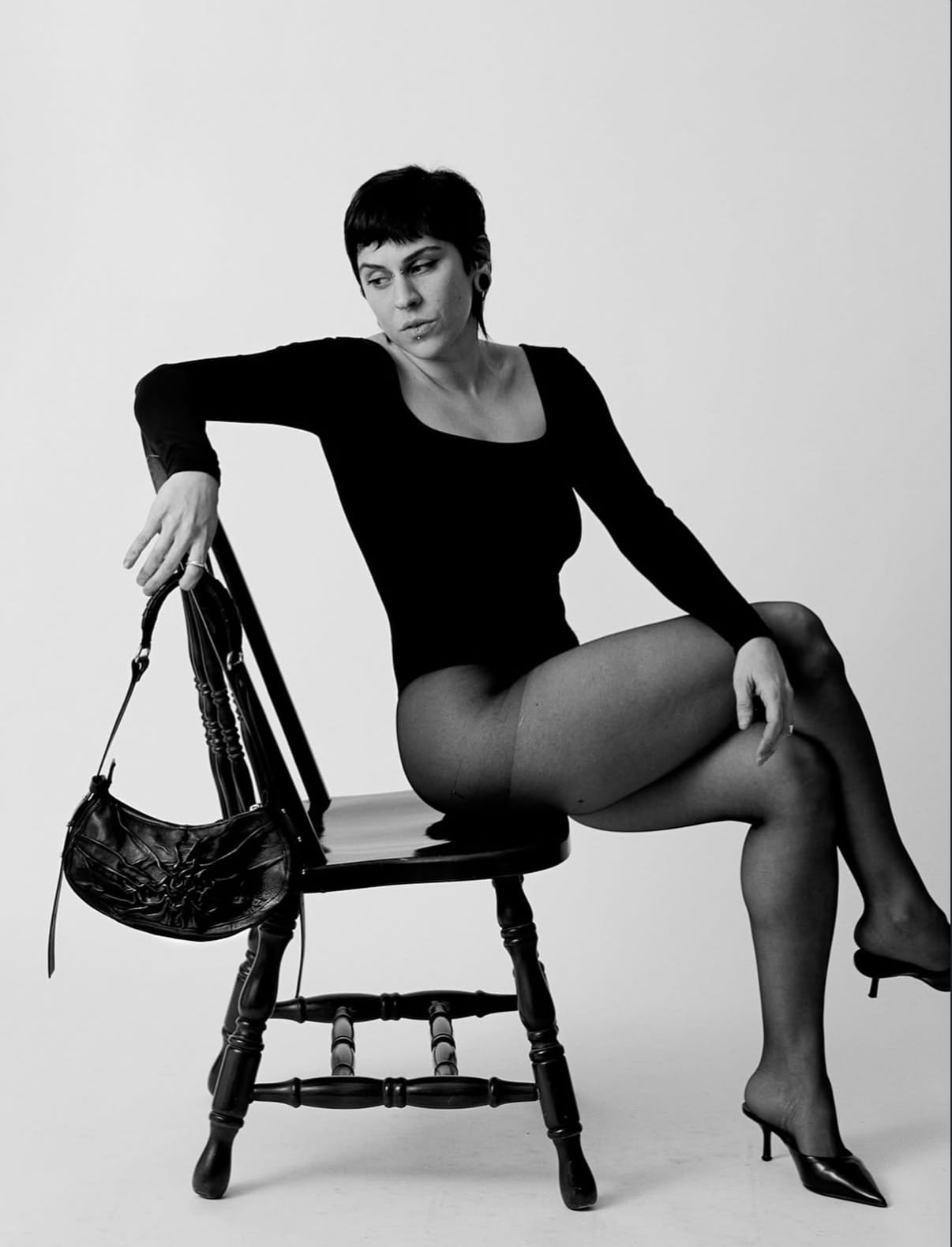
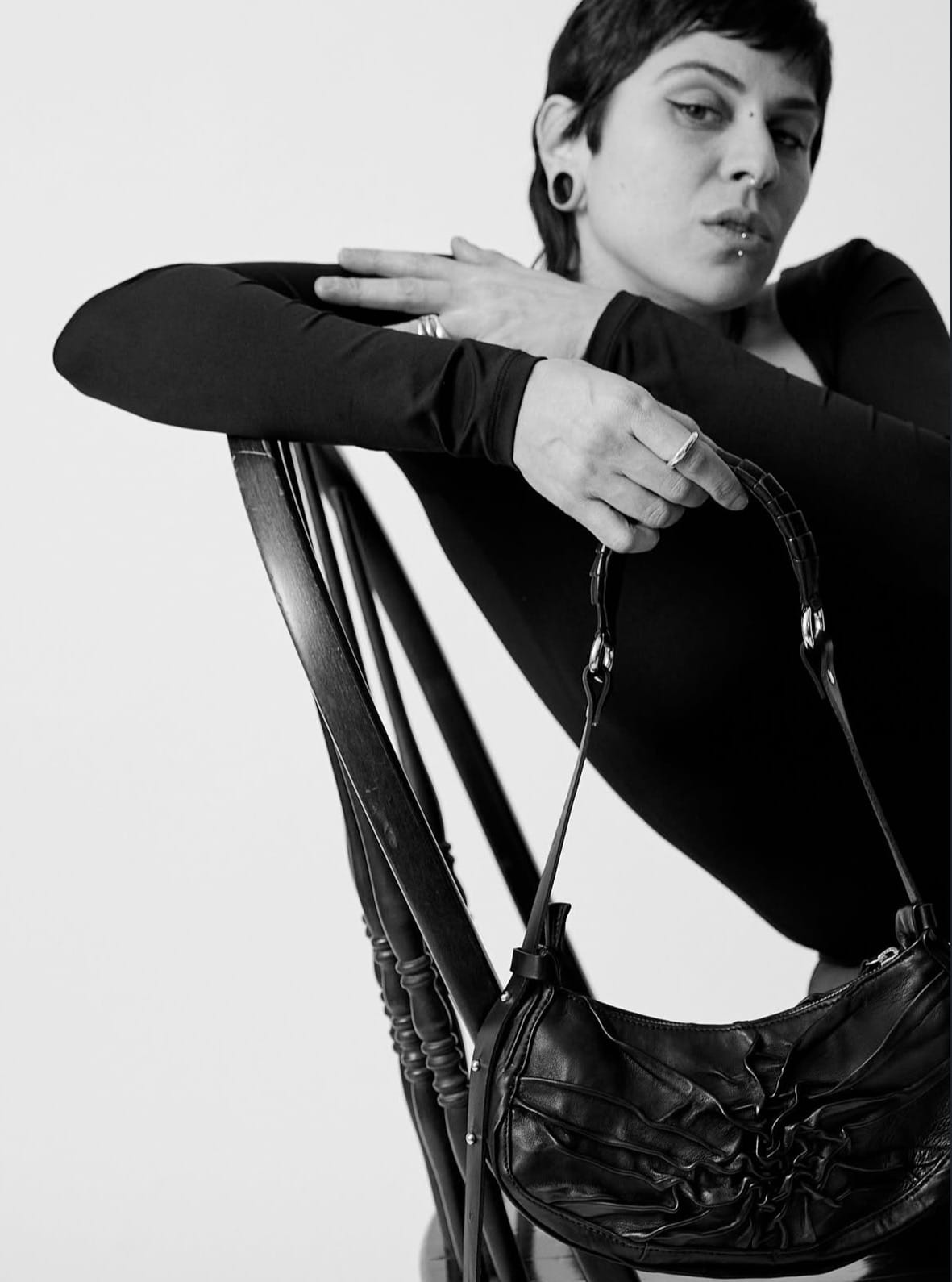
This is not a metaphor for a design philosophy. It is a description of an actual technique — one that sits at the heart of an independent practice that Moyal has built with rare deliberateness and even rarer restraint. Working entirely by hand from her atelier, she produces pieces slowly, in conscious and unapologetic opposition to the automated pace of contemporary fashion. Every piece is shaped through direct, physical interaction with the material. Nothing is delegated. Nothing is rushed. The hands that studied the craft in Florence are the same hands that finish each piece today, and the continuity of that touch is present in every surface, every fold, every edge that has been worked until it found its right form
"Moyal does not impose a design onto the leather. She proposes one — and then listens carefully enough to hear what the material says back. That conversation, between maker and material, is where the work lives."
The Florence education is foundational, but what Moyal has built from it is entirely her own. Traditional leather craftsmanship gave her the vocabulary — the understanding of how the material behaves under pressure, how it remembers and forgets, how it ages and softens and tells its own story over time. Her signature crumpling technique is where that vocabulary becomes a voice. By manually working the lamb leather until its surface transforms into something that looks less manufactured than naturally formed, she produces objects that carry the paradox of the best craft: they feel inevitable, as though they could not have existed in any other shape, and yet they are the result of an enormous amount of considered human effort.
The pieces balance sculptural beauty with functionality, comfort, and longevity — which is itself a statement in a fashion moment that has grown increasingly comfortable with beauty that is purely visual, purely conceptual, or purely temporary. A Moyal piece is none of those things. It is meant to be used, worn, handled, and kept — to develop its own patina over years of contact with the person who owns it, becoming more itself the longer it exists in the world. That relationship between object and owner, between craft and time, is built into the making from the beginning.
In a world moving faster than it has ever moved — faster seasons, faster production, faster consumption, faster forgetting — Noam Moyal's practice is a quiet and completely confident insistence on the opposite. Not as nostalgia, not as aestheticised slowness, but as a genuine conviction that the most meaningful things take the time they take and cannot be hurried without losing something essential. The leather knows this. And so does she.
This is, without qualification, some of the most beautiful work being produced in fashion right now. Not because it announces itself loudly — it does not — but because the closer you look, the more there is to find. Which is the oldest mark of craft done at the highest level, and the one that matters most.